……….about the benefit of doing an intervention on my current research question. This is because I think the question can be well answered using desk research and expert, secondary stakeholders.
Discussions in Malawi over the next two weeks will develop or dispel this doubt.
In the meantime, new questions are emerging based on observations on the methods, conditions, and efficacy of existing outreach from NGOs operating in this market, and the lasting impact of government extension work.
What can be observed about the physical environment and conditions that outreach / extension takes place in?
What is left behind for reference / further extension?
Is the projects topic and outcome genuinely and sustainably interesting?
Using a triangulation model, this was answered as “yes” and sustainably so over a long period of time.
Insight
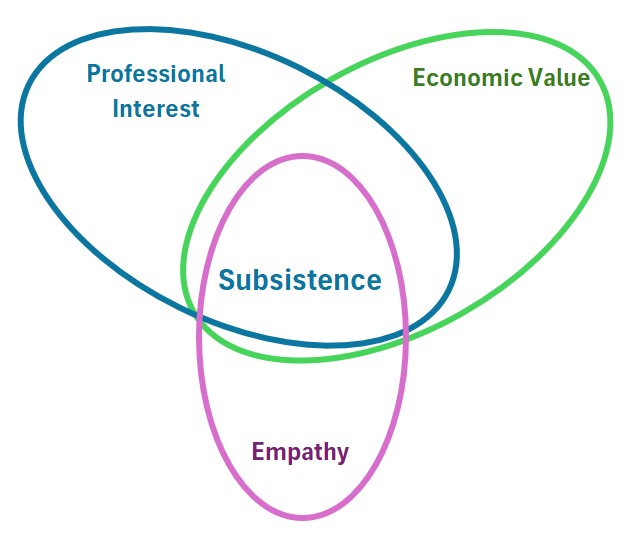
Why is it interesting to you?
The word “subsistence” seems central. It is agreed beyond debate that outcomes for subsistence farmers are poor. Breaking out of the cycle is the objective. This is interesting professionally and it has economic value so is sustainable. I realised I have an empathy with people who don’t have enough to get to the next stage.
Intrigue
Is it interesting to others?
For right and wrong reasons, there are whole industries built around this and similar topics.
Improve
Can it be improved?
Yes. There are many examples of where and how outcomes are radically improved. For some reason, improvement has proved hard in this context.
Ahead of the planned workshop, I have revisited some learning and teaching design work previously done. And noted the following to reflect on.
How to explain the overall purpose of the workshop. Action research is defined by Savin-Baden et al (2013), as:
“A method of qualitative research the purpose of which is to engage in problem solving through a cyclical process of thinking, acting, data gathering and reflection”.
Within the typology of action research, the proposed design is described as “practical / pragmatic” by Savin-Baden et al (2013 as:
“its goal is understanding practice and solving immediate problems”.
Pedagogical theory sense checking or not
Rhodes, Stokes and Hampton, G., (2004, state there is considerable ongoing disagreement on the how adults learn and, consequently, on appropriate teaching styles.
It may well make sense to abandon, in part, pedagogical literature in this action research to find innovative solutions.
Variable interventions by a researcher / practitioner.
One risk in action research is pointed out by Maylor et al, (2005 – that of closely adopting the position or reactions of the research subject and becoming too involved in the research focus. This could manifest itself through interventions specific to the practitioner and therefore not be repeatable.
Accurate data recording in the thick of it.
Another risk highlighted by Maylor et al, (2005) is that of accurate data recording when the researcher is directly involved. Here they suggest rigorous diary keeping on a daily basis.
References.
Maylor, H., and Blackmon, K., (2005), “Researching Business and Management”, Palgrave MacMillan, Basingstoke, Hampshire, UK
Savin-Baden, M., & Howell Major, C., (2013) “Qualitative Research, The essential guide to theory and practice”, Routledge, Abingdon, UK
Gorard, S. (2013) “Research design: creating robust approaches for the social sciences”, London : SAGE Publications Ltd
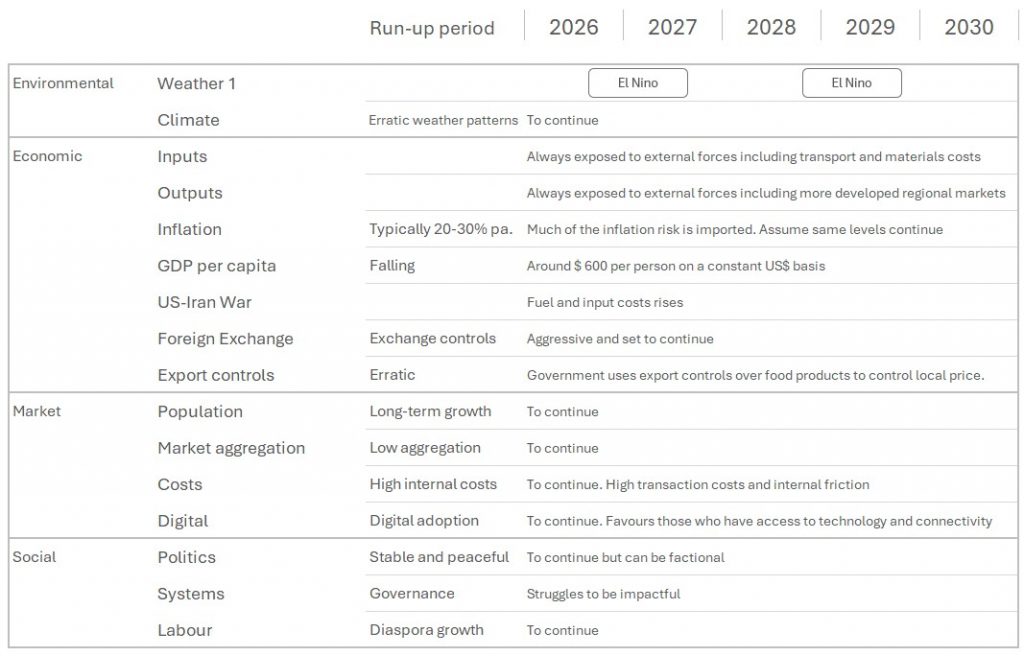
Stakeholder scenario planning has been undertaken looking at multiple sources.
The objective is to draw a top-level framework to better consider the “what ifs?” and “what next?”.
In doing this work, it is even more apparent that:
Malawi is at the wrong end of the factors that impact its economy. It is land-locked so has high transport costs and non-tariff barriers. At the best of times, it has limited access to oil, gas and fertilizer. This is being made worse by the US-Iran War.
El Nino (which is pronounced this year) has historically caused drought in the 4th quarter and 1st quarter of the following year implying that 2026 / 2027 will be challenging when even in a normal year there is nationwide malnutrition.
Scenario planning risk for Malawi is externalised.
From an intervention perspective, this opens-up a path to exploring resilience by avoiding input and resource reliance.
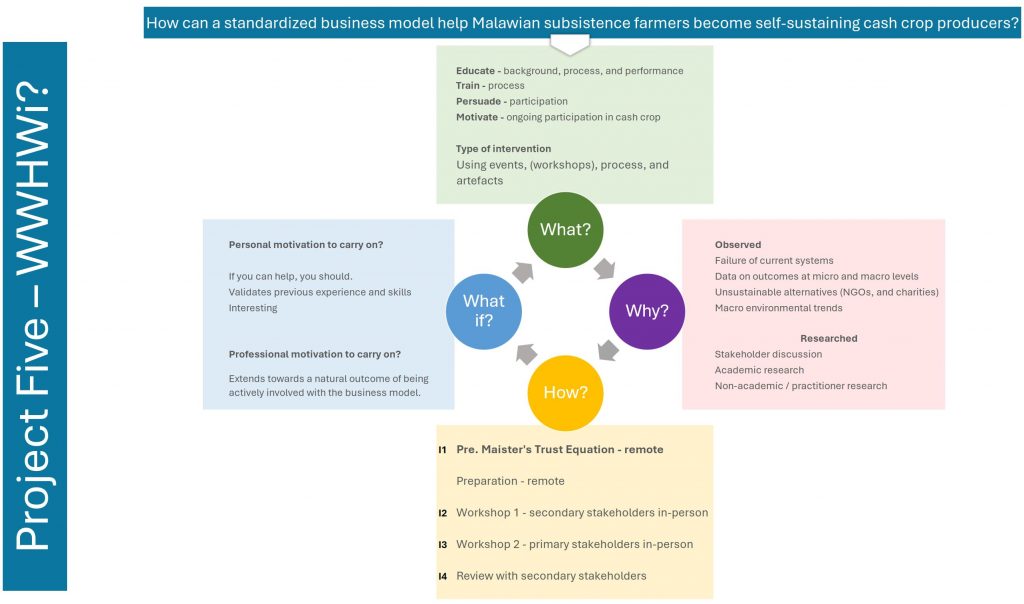
Summarised below is cycle representing WWHWi?. The how resolves to a multistage intervention with two workshops in Malawi for two distinct stakeholder groups.
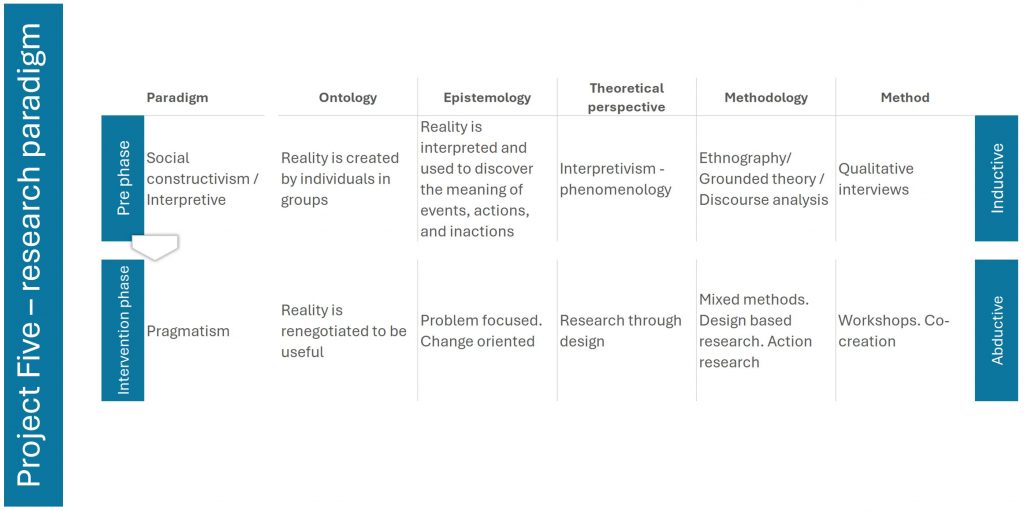
P5. Research paradigm
In two stages, inductive (social constructivism / Interpretive) and then, probably, abductive (pragmatism).
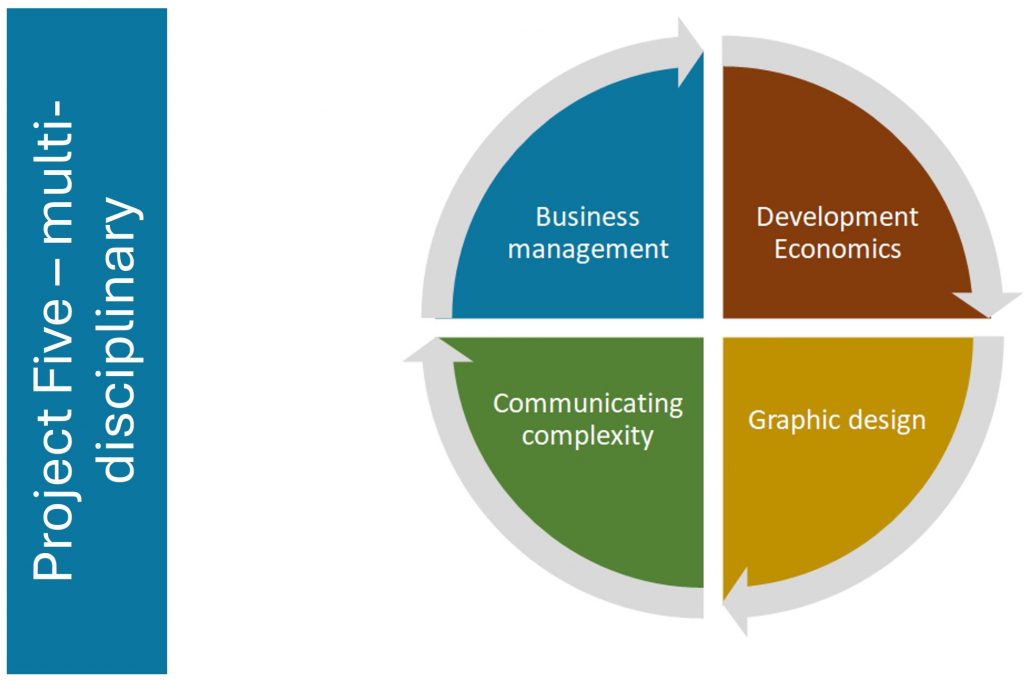
P5. Multi-disciplinary
At least four disciplines but likely many more.
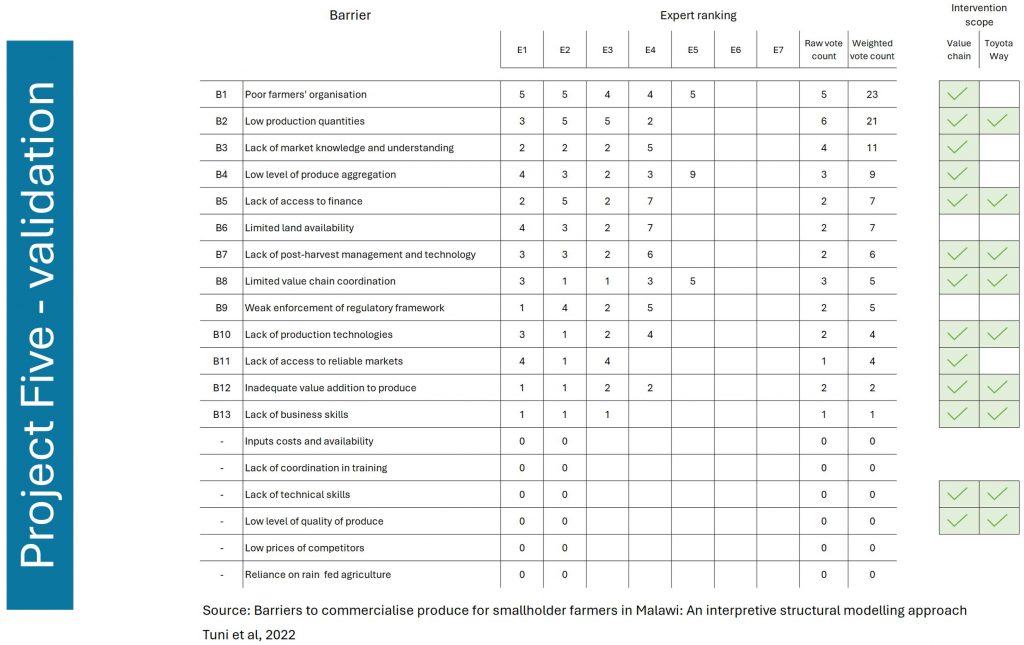
P5. Validation
Amongst many, a great paper by Tuni et al, 2022 validates the current approach.
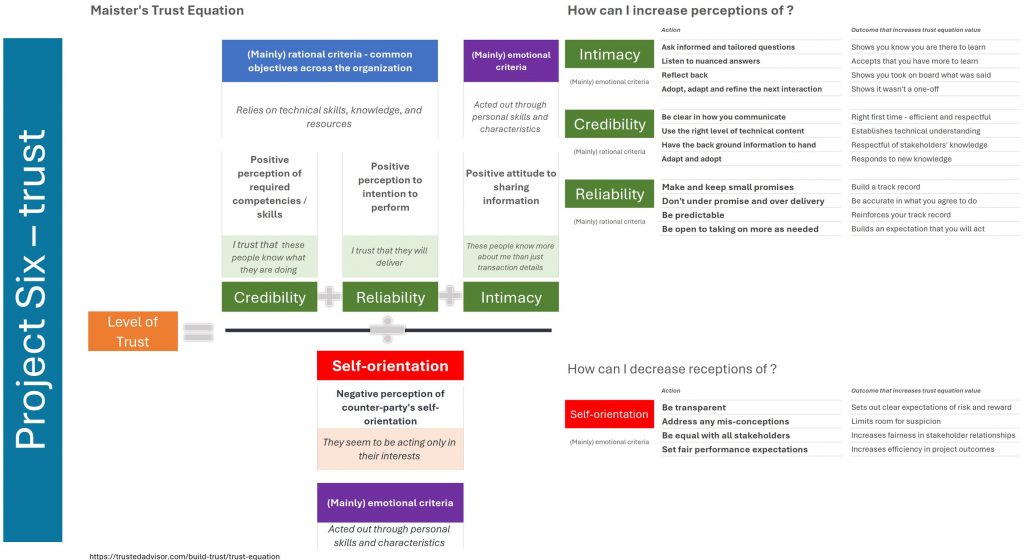
P6. Trust
Maister’s trust equation is useful approach to building trust by indexing specific aspects. This was the start of the first intervention.
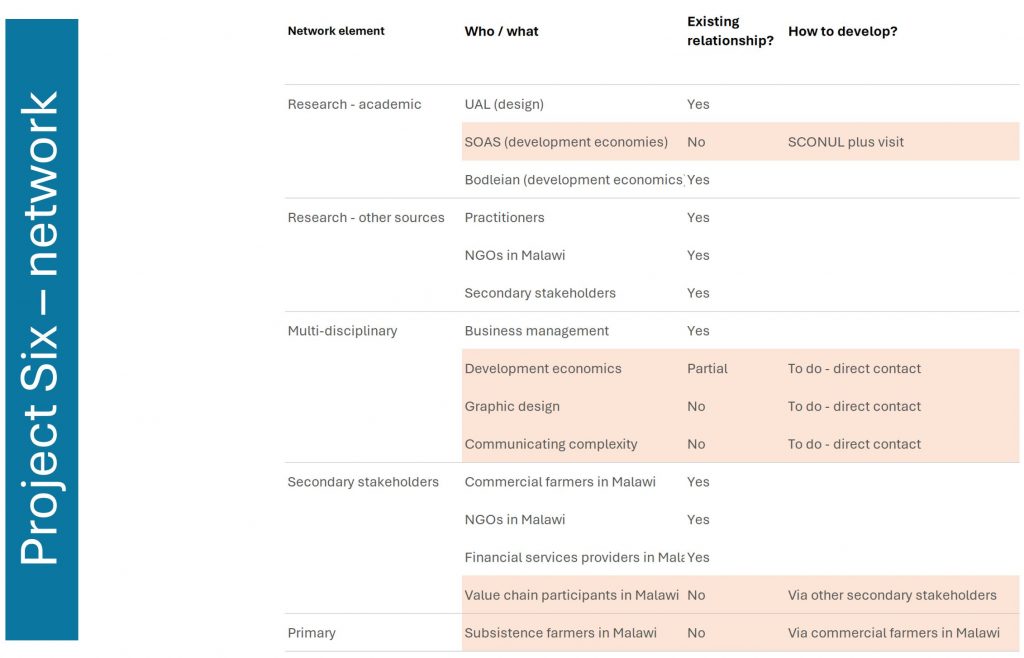
P6. Network
Already partly developed in Malawi with work being done.
An evolving network is building in Malawi of secondary stakeholders who seem interested in the idea of value chain building upon an overtly commercial model.
An NGO who has been active in Malawi is engaging as they have had ongoing problems with sustainability, made worse by the withdrawal of much US and UK aid.
Another set of commercial entities that are part of similar value chains have engaged because of contacts made and a commitment to be in Malawi in 2026. This was part of the Maister’s Trust equation systematic approach by making and delivering of commitments building credibility and reliability.
P6. Stakeholders
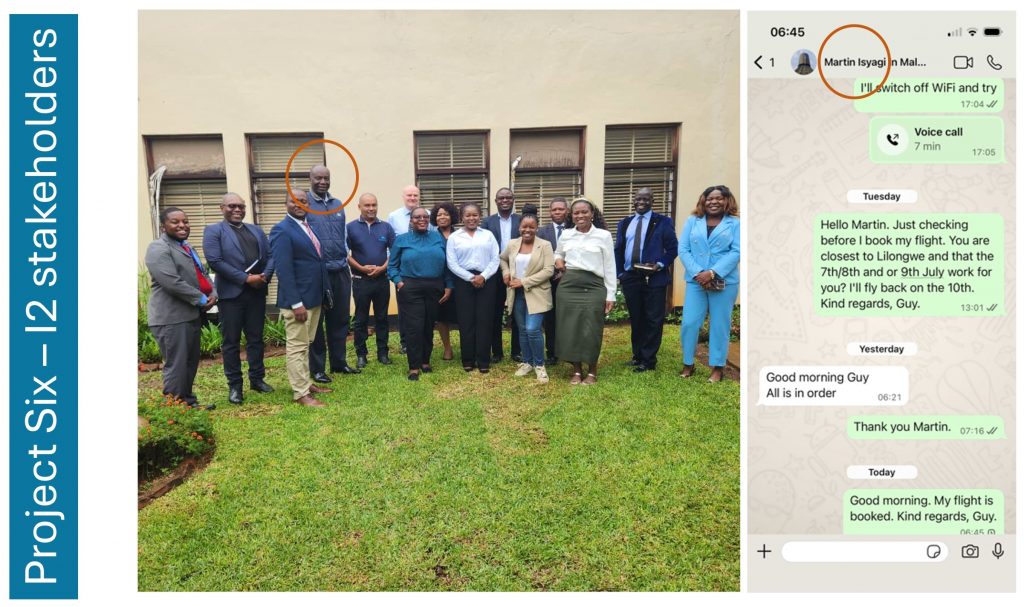
Key stakeholder circled is a commercial farmer and bee keeper who approached me to discuss the project. Our Whatsapp from the 14th May 2026 confirming the second intervention (I2) workshop in early July.
Primary stakeholder research is ongoing ahead of the workshop. Primary stakeholder issues being considered.
Intrahousehold power, land rights and engendered issues (Manja et al. 2025)
Understand and trust of value chains ((Branca et al, 2021, CABI, 2026, Kakwera et al 2025, Kalvelage et al. 2023)
There is no shortage of research on the primary stakeholder yet their outcomes remain very poor indicating a disconnect between the theory and its effective practice.
Performance management
On track for Units 1 and 2.
Unit 3 to be agreed.
Performance metrics for the interventions overall to be discussed in Malawi 7th and 8th July
References
Branca, G. et al. (2021) “Cereal-Legume Value Chain Analysis: A Case of Smallholder Production in Selected Areas of Malawi,” Agriculture (Basel), 11(12), p. 1217. Available at: https://doi.org/10.3390/agriculture11121217.
Kakwera, M.N., Kambewa, D. and Haug, R. (2025) “Equitable food systems in practice? The case of smallholders’ marketing of legumes in Malawi,” Frontiers in sustainable food systems, 9, p. 1542976. Available at: https://doi.org/10.3389/fsufs.2025.1542976.
Kalvelage, L. et al. (2023) “Inside-out strategic coupling for smallholder market integration – Mango production in Malawi as a test case,” Outlook on agriculture, 52(2), pp. 174–185. Available at: https://doi.org/10.1177/00307270231179240.
Manja, L.P., Zingwe, D.E. and Kamangila, A.E.S. (2025) “Smallholder farming commercialization and food security in Malawi: do land rights and intrahousehold bargaining power matter?,” Agriculture & food security, 14(1). Available at: https://doi.org/10.1186/s40066-025-00520-9
Tuni, A., Rentizelas, A. and Chipula, G. (2022) “Barriers to commercialise produce for smallholder farmers in Malawi: An interpretive structural modelling approach,” Journal of rural studies, 93, pp. 1–17. Available at: https://doi.org/10.1016/j.jrurstud.2022.05.003.
Raised a few times, and recently in a tutorial. It annoys me but it made me think why it annoys me, is there a valid point, and what I can do about it.
Directly answering the points being lifting a list of characteristics of “white saviour complex” off Co-Pilot.
Will use Maister’s Trust Equation as a control document thinking about the following points.
Key Aspects and Characteristics
Motivations: Often driven by a need to feel good or validate privilege rather than addressing systemic issues.
I don’t need to do this to feel good about my privilege.
Behaviour: Involves “parachuting” into a community, failing to listen to local needs, and acting with a sense of superiority.
Risk noted.
Media/Imagery: Frequently involves taking photos or videos with local children (often in the Global South) to showcase the “saviour’s” work on social media.
I don’t do social media or have my picture taken unless I can avoid it.
“White Savior Industrial Complex”: Termed by Teju Cole to describe a, often, non-profit or aid industry that focuses more on the emotional experience of the helper than the actual, complex needs of the helped.
This is not for charity.
Examples in Culture and Society
Voluntourism: Short-term, unskilled volunteers performing work that local people could do better, sometimes disrupting local economies or causing harm (e.g., orphanage tourism).
I’m not volunteering to do this.Good point in general if the project progresses beyond the MAAI.
How to Avoid the White Saviour Complex
Listen and Learn: Educate yourself on the history, culture, and power structures of the community before attempting to help.
Noted and being done.
Empowerment: Focus on supporting local leaders and capacity-building rather than being the leader or face of a project.
Noted. Good point. Always been a core part of the design but will be developed.
Examine Motivations: Ensure actions are driven by solidarity, not by the need for personal validation or photo opportunities.
Risk noted.
Be an Ally: Use your privilege to change the system, not just to assist individuals within an unfair system.
Noted. Good point. Always been central but will be developed.
Some other presenters brought real energy and theatre to their pitches. In one presentation, clear effort had been put into the design quality of their PowerPoint.
Both these issues I am weak at.
I tend to rely on technical understanding of my topic which comes out as confidence and focus. Being naturally introverted, this is an effective shield.
My design is generally technical and centres on precise communication of information rather than visual attractiveness.
My pitch went OK.
The Dragons mentioned the following.
The use of the word “we”. I mean “I” but I’m (rightly) conditioned to minimise the personal “me me me”.
We discussed the challenge of communicating with primary stakeholders and the complexity therein. This was covered in previous projects also.
The Dragon’s gave some useful references to look up including Heffer International.
Progressing on from Project Three, and in discussion with secondary stakeholders, the project is still considered viable and valuable.
As mentioned in the blog post on the 28th March, the nagging question is that of being compelled to do something about this, assuming the intervention is successful. Exploring the Integrated Food Security Phase Classification data on the deeply entrenched nature of food insecurity in Malawi was an added motivation.
As mentioned in the blog post on the 13th April, the specific contingent environment is clear and focused. Also, there is an emerging set of critical success factors. Both are dependent on design thinking.
Thinking about design thinking.
Frustratingly, we touched only very briefly on design thinking as part of Unit 2. This was a missed opportunity so will revisit this in detail in the coming weeks as foundational work. Will explore the Design Council’s Double Diamond model, IDEO’s resources, Strategyzer’s resources. Crucially, there is a clear need to avoid making the role and process of designing / design practice as exclusive to anyone. They must be adopted and owned as actions by primary stakeholders.
Thinking about non / multi / cross / between disciplines.
Another challenge is building out a wider, adaptable network to bring this to life. Work in progress.
Refined and reflected upon research question.
How can a standardized business model help subsistence farmers become self-sustaining cash crop producers?
To be effective, a business model would need to be co-developed with users and capacity building would need to take part in small groups to truly transfer and embed knowledge.
At this stage.
This is a viable project. Although risky and resource heavy, there are no show-stoppers. The challenge for the next stage is in engaging secondary stakeholders and, through them, primary stakeholders.
As noted in the previous blog post 28th March, the compulsion to do the intervention being developed could morph into getting involved afterwords to bring the commercial outcome to life. From a research perspective, this introduces a whole set of risks and biases that I will need to potentially manage.