Author: Guy Ainsley

  • Project Five and Six

    P5. WWHWi?

    Summarised below is cycle representing WWHWi?. The how resolves to a multistage intervention with two workshops in Malawi for two distinct stakeholder groups.

    P5. Research paradigm

    In two stages, inductive (social constructivism / Interpretive) and then, probably, abductive (pragmatism).

    P5. Multi-disciplinary

    At least four disciplines but likely many more.

    P5. Validation

    Amongst many, a great paper by Tuni et al, 2022 validates the current approach.

    P6. Trust

    Maister’s trust equation is useful approach to building trust by indexing specific aspects. This was the start of the first intervention.

    P6. Network

    Already partly developed in Malawi with work being done.

    An evolving network is building in Malawi of secondary stakeholders who seem interested in the idea of value chain building upon an overtly commercial model.

    An NGO who has been active in Malawi is engaging as they have had ongoing problems with sustainability, made worse by the withdrawal of much US and UK aid.

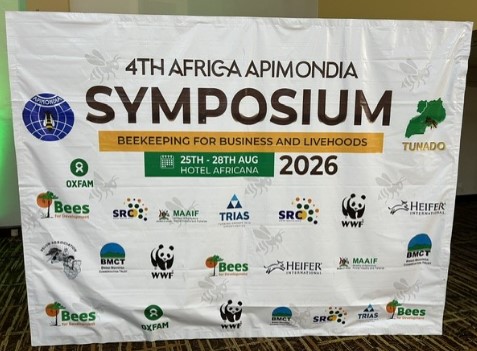
    Another set of commercial entities that are part of similar value chains have engaged because of contacts made and a commitment to be in Malawi in 2026. This was part of the Maister’s Trust equation systematic approach by making and delivering of commitments building credibility and reliability.  

    P6. Stakeholders

    Key stakeholder circled is a commercial farmer and bee keeper who approached me to discuss the project. Our Whatsapp from the 14th May 2026 confirming the second intervention (I2) workshop in early July.

    Primary stakeholder research is ongoing ahead of the workshop. Primary stakeholder issues being considered.

    Intrahousehold power, land rights and engendered issues (Manja et al. 2025)

    Understand and trust of value chains ((Branca et al, 2021, CABI, 2026, Kakwera et al 2025, Kalvelage et al. 2023)

    There is no shortage of research on the primary stakeholder yet their outcomes remain very poor indicating a disconnect between the theory and its effective practice.

    Performance management

    On track for Units 1 and 2.

    Unit 3 to be agreed.

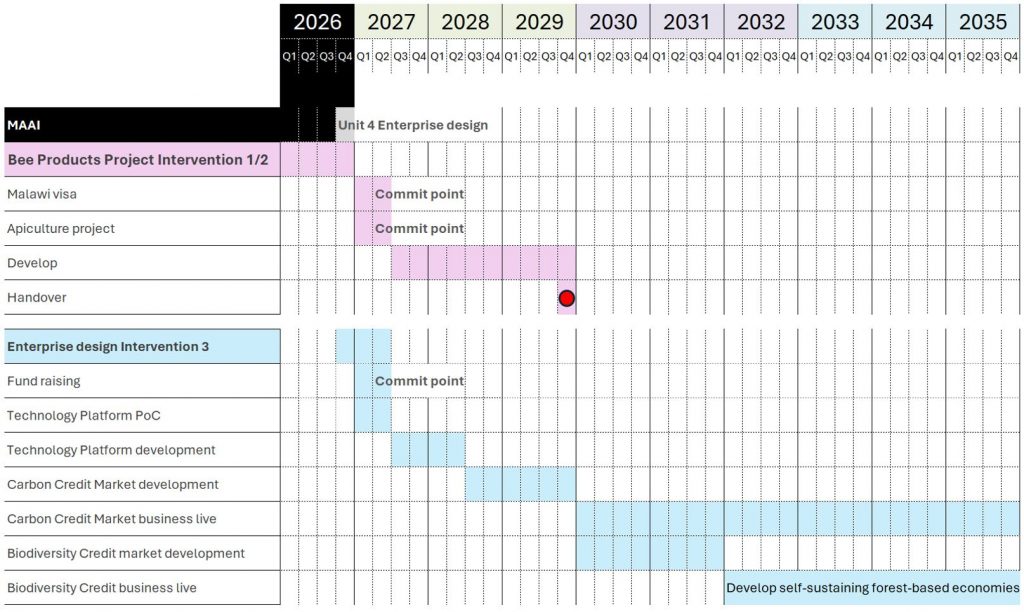
    Performance metrics for the interventions overall to be discussed in Malawi 7th and 8th July

    References

    Branca, G. et al. (2021) “Cereal-Legume Value Chain Analysis: A Case of Smallholder Production in Selected Areas of Malawi,” Agriculture (Basel), 11(12), p. 1217. Available at: https://doi.org/10.3390/agriculture11121217.

    Skills for Agriculture Framework – CABI.org accessed 28/04/2026

    Kakwera, M.N., Kambewa, D. and Haug, R. (2025) “Equitable food systems in practice? The case of smallholders’ marketing of legumes in Malawi,” Frontiers in sustainable food systems, 9, p. 1542976. Available at: https://doi.org/10.3389/fsufs.2025.1542976.

    Kalvelage, L. et al. (2023) “Inside-out strategic coupling for smallholder market integration – Mango production in Malawi as a test case,” Outlook on agriculture, 52(2), pp. 174–185. Available at: https://doi.org/10.1177/00307270231179240.

    Manja, L.P., Zingwe, D.E. and Kamangila, A.E.S. (2025) “Smallholder farming commercialization and food security in Malawi: do land rights and intrahousehold bargaining power matter?,” Agriculture & food security, 14(1). Available at: https://doi.org/10.1186/s40066-025-00520-9

    Tuni, A., Rentizelas, A. and Chipula, G. (2022) “Barriers to commercialise produce for smallholder farmers in Malawi: An interpretive structural modelling approach,” Journal of rural studies, 93, pp. 1–17. Available at: https://doi.org/10.1016/j.jrurstud.2022.05.003.

    Design Thinking | United Nations Development Programme accessed 28/04/2026qerferf

  • Answering an important if annoying question re. “white saviour complex”.

    Raised a few times, and recently in a tutorial. It annoys me but it made me think why it annoys me, is there a valid point, and what I can do about it.

    Directly answering the points being lifting a list of characteristics of “white saviour complex” off Co-Pilot.

    Will use Maister’s Trust Equation as a control document thinking about the following points.

    Key Aspects and Characteristics

    • Motivations: Often driven by a need to feel good or validate privilege rather than addressing systemic issues.

    I don’t need to do this to feel good about my privilege.

    • Behaviour: Involves “parachuting” into a community, failing to listen to local needs, and acting with a sense of superiority.

    Risk noted.

    • Media/Imagery: Frequently involves taking photos or videos with local children (often in the Global South) to showcase the “saviour’s” work on social media.

    I don’t do social media or have my picture taken unless I can avoid it.  

    • “White Savior Industrial Complex”: Termed by Teju Cole to describe a, often, non-profit or aid industry that focuses more on the emotional experience of the helper than the actual, complex needs of the helped.

    This is not for charity.

    Examples in Culture and Society

    • Voluntourism: Short-term, unskilled volunteers performing work that local people could do better, sometimes disrupting local economies or causing harm (e.g., orphanage tourism).

    I’m not volunteering to do this. Good point in general if the project progresses beyond the MAAI.

    How to Avoid the White Saviour Complex

    • Listen and Learn: Educate yourself on the history, culture, and power structures of the community before attempting to help.

    Noted and being done.

    • Empowerment: Focus on supporting local leaders and capacity-building rather than being the leader or face of a project.

    Noted. Good point. Always been a core part of the design but will be developed.

    • Examine Motivations: Ensure actions are driven by solidarity, not by the need for personal validation or photo opportunities.

    Risk noted.

    • Be an Ally: Use your privilege to change the system, not just to assist individuals within an unfair system.

    Noted. Good point. Always been central but will be developed.

  • Dragon’s Den

    The Dragon’s Den was an interesting experience.

    Watching other presenters and learning.

    Some other presenters brought real energy and theatre to their pitches. In one presentation, clear effort had been put into the design quality of their PowerPoint.

    Both these issues I am weak at.

    I tend to rely on technical understanding of my topic which comes out as confidence and focus. Being naturally introverted, this is an effective shield.

    My design is generally technical and centres on precise communication of information rather than visual attractiveness.

    My pitch went OK.

    The Dragons mentioned the following.

    The use of the word “we”. I mean “I” but I’m (rightly) conditioned to minimise the personal “me me me”.

    We discussed the challenge of communicating with primary stakeholders and the complexity therein. This was covered in previous projects also.

    The Dragon’s gave some useful references to look up including Heffer International.

  • Commit

    Progressing on from Project Three, and in discussion with secondary stakeholders, the project is still considered viable and valuable.

    As mentioned in the blog post on the 28th March, the nagging question is that of being compelled to do something about this, assuming the intervention is successful. Exploring the Integrated Food Security Phase Classification data on the deeply entrenched nature of food insecurity in Malawi was an added motivation.

    As mentioned in the blog post on the 13th April, the specific contingent environment is clear and focused. Also, there is an emerging set of critical success factors. Both are dependent on design thinking.

    Thinking about design thinking.

    Frustratingly, we touched only very briefly on design thinking as part of Unit 2. This was a missed opportunity so will revisit this in detail in the coming weeks as foundational work. Will explore the Design Council’s Double Diamond model, IDEO’s resources, Strategyzer’s resources. Crucially, there is a clear need to avoid making the role and process of designing / design practice as exclusive to anyone. They must be adopted and owned as actions by primary stakeholders.

    Thinking about non / multi / cross / between disciplines.

    Another challenge is building out a wider, adaptable network to bring this to life. Work in progress.

    Refined and reflected upon research question.

    How can a standardized business model help subsistence farmers become self-sustaining cash crop producers?

    To be effective, a business model would need to be co-developed with users and capacity building would need to take part in small groups to truly transfer and embed knowledge.

    At this stage.

    This is a viable project. Although risky and resource heavy, there are no show-stoppers. The challenge for the next stage is in engaging secondary stakeholders and, through them, primary stakeholders.

    As noted in the previous blog post 28th March, the compulsion to do the intervention being developed could morph into getting involved afterwords to bring the commercial outcome to life. From a research perspective, this introduces a whole set of risks and biases that I will need to potentially manage.

    https://www.designcouncil.org.uk/our-resources/the-double-diamond/
    https://www.ideou.com/en-gb/pages/design-thinking?srsltid=AfmBOoqWF2tleXA021XKhbF9bcEgZtRqTYOloAnDOMczXLn1rwpzayqQ
    https://www.ipcinfo.org/
    https://www.strategyzer.com/

  • Change I want to see, touch, feel, and measure.

    Relates only to the contingent environment I am proposing to work in.

    The change has three aspects:

    1. Stop accepting that the outcome cycle for this environment can’t be changed.
    2. Stop assuming that charities / NGOs are the way to solve the problems.
    3. Stop assuming primary stakeholders can’t take control of, (and own), the processes and resources for change.

    Critical success factors for the intervention (as seen at present prior to a design thinking session).

    • Uses appropriate methodology that ensures that primary stakeholders are centralised on their terms
    • Processes can be explained simply
    • Processes can be replicated
    • Processes can be adapted
  • Stopped in my tracks

    Towards the end of the Project Four brief, under “some additional factors to consider”, is the bullet point question “Have you seriously considered what would happen if this change occurred?”

    If I demonstrate that this is useful work, and I could deliver not just the intervention but also then do it for real…

    …..am I compelled to do this?

  • Investigating Impact

    As a person?

    Born and raised in England, near a river and a wood. Steeped in a concentrated old school social system of pubs, football, music, travel, and carrying on. Middle of three brothers.

    Parents from the North East and they had it much tougher. They got out by going to grammar school and then university.   

    I’ve a varied career mainly in automotive industries and higher education (business schools). I still work in the automotive sector as a consultant and spend some time at a business school focusing on project management executive education

    As a researcher? My curiosity? MAAI participation?

    Interested in how and why things work to improve performance and resilience through better design.

    Taking a year to reenergise and realign for the next ten years.  

    My values?

    Straight up, straight down and try to treat people the same way.

    Capitalist.

    Subsistence farmers – primary stakeholders – have a lot of potential value.

    Secondary stakeholders can help build resilience.

    I think I can do a good job of bringing out the potential value using previous experience, education, what I learn on MAAI and my approach to getting stuff done.

    Malawi

    • Per capita GDP c. $ 600 pa
    • c. 7% of rural population have access to electricity
    • c. 25% of the population is mal-nourished
    • c. 35% of children are stunted
    • adult female literacy at roughly 62–67% compared to over 75% for men

    This is a direct result of long-term poor governance.

    Duarte (2017) says that positionality requires researchers to identify their own degrees of privilege through factors of:

    Race?                   Is what it is.

    Class?                 Middle. My parents worked very hard their entire lives from very poor backgrounds. We benefitted and never forget it and them.

    Education?        OK state schools. Left early and worked hard since.

    Income?             Worked hard for it.

    Ability?                Natural, the product of a good upbringing, and hard work.

    Gender?             Is what it is.

    Savin-Baden and Howell-Major 2013 develop positionality as referring to where a researcher stands in relation to their research participants and “reflects the position that the researcher has chosen to adopt within a given research study”.

    Thanking the authors above, I chose to use the latitude given to adopt a commercial position in that the intervention will only work if the participants can turn the output into a successful commercially viable outcome.

    Probably…………..maybe both inductive and deductive at the end but abductive at the start and in the middle or not

    Paradigm.

    Socio-critical and / or pragmatism

    Ontology

    Reality is king

    Practicality is table stakes

    Epistemology

    Knowledge can be developed and therefore changed. Knowledge is developed by iteration within a measurable framework.

    Methodology

    Mixed – desk research, interviews, action research

    Question types

    To be developed

    Critical success factors

    To be developed

    • Two visits to Malawi in 2025. Met and discussed governance issues with ministers, banks, and chamber of commerce.
    • Ran three successful workshops which successfully tested engagement methodologies for small groups.
    • Multiple conversations with Martin the Farmer (scale crop farmer and forester).
    • Tiyeni are an active NGO in Malawi who have done great work but struggle with sustainability of outcome.   

    Thinking this through, the project is viable and valuable.

    Multiple execution and measurement challenges to be worked on. As noted by Jaques and Salmon (2007)

    “Learning how to work with specific primary stakeholders. Groups do not exist in a vacuum; they are part of a social network and a physical or virtual environment in which the learners exchange experiences and share values at different levels”.

    Duarte, M.E. (2017). Network Sovereignty: Building the Internet Across Indian Country. Seattle: University of Washington Press.

    Jaques, D., & Salmon, G. (2007). Learning in Groups: A Handbook for Face-to-Face and Online Environments (4th ed.). Routledge.

    Savin-Baden, M., & Howell Major, C. (2013). Qualitative Research: The Essential Guide to Theory and Practice (1st ed.). Routledge.

    Tiyeni https://www.tiyeni.org/

  • Dirty business

    Subsistence farming is a dirty business.

    For many or most subsistence farmers, the activity consumes more calories than it produces.

    The lack of scale makes mechanization unviable, so subsistence farming is structurally less efficient than scaled-up farming.

    Subsistence farming is exposed to climate change and unpredictable weather due to a lack of irrigation.

    Subsistence farming is often limited to certain times of the year due to its inability to manage inputs including water.

    Subsistence farming cannot easily store or preserve its output, so any market value is short-lived.

    Subsistence farming cannot easily pack and / or process its output to add value or to access more lucrative markets.

    Subsistence farming can only sell locally, and at the spot price. Farmers directly compete with their neighbours, in the same market at the same time.

    Subsistence farmers are continuously at physical risk from accidents and wear and tear.

    Subsistence farmers often have no legal title to their land and few means of getting one.

    Subsistence farming produces little or no reliable excess so farmers cannot create capital as a wealth store or to leverage it. 

    Most subsistence farmers struggle to break out of this cycle. Potential solutions struggle to break into this market.